

The Paradox of the Future Self
We are taught that building a future is an individual journey. But what if looking ahead reveals that an isolated life is completely empty? To truly understand who you will become, you first have to unlearn everything you know about independence.
Identity • Ancestral Becoming • Future Self
I look in the mirror and stare at myself. My reflection doesn’t change, no matter how long I stare. But something in me knows — the person looking back is already in motion, already becoming someone I haven’t fully met yet.
It is one of the most quietly radical questions a person can ask: What will I become? Not what will I accomplish, or what will I accumulate — but who will I be? What will I carry forward, and what will I finally be free enough to put down? What version of myself is waiting on the other side of all this living?
This question has followed human beings across every culture and every era. Our ancestors asked it around fires and in temples, in the quiet after loss, in the rush of new possibility. They did not ask it in isolation — they asked it in community, in ceremony, in conversation with those who had already walked ahead. The future self was never a solitary destination. It was a homecoming back to the village.
At Ubuntu Village, we believe that becoming is not a private project. It is a collective inheritance. Who you are growing into is shaped by every ancestor who refused to give up, every elder who whispered courage into the next generation, every community that held someone together when they could not hold themselves. I am because we are. And who I am becoming — I am becoming with you. The science of epigenetics and ancestral memory confirms what our traditions have always known: our becoming is inherited.
Inside This Reflection:
- The Independence Fallacy: Why planning your future in isolation limits your growth.
- Living Ubuntu: How grassroots community impact across East Africa changes our personal timelines.
- The Legacy Check: A perspective shift on ensuring your current actions honor your future self.

The Question Beneath the Question
When we ask what will I become, we are rarely just asking about the future. We are asking about identity — about whether who we are right now is enough, whether the choices we have made are taking us somewhere meaningful, whether the life we are living reflects the life we were meant to live.
Psychologists call this future self-continuity — the degree to which we feel connected to the person we will be in 5, 10, or 30 years. Research published in Psychological Science has shown that people with a stronger sense of continuity with their future selves make better decisions today: they save more, take better care of their bodies, invest more meaningfully in relationships. When we can actually see our future self — not as a stranger but as a familiar — we treat them with more care.
But there is something the research does not always capture: the ancestral dimension of becoming. In many African and Afro-diasporic traditions, identity is not simply personal — it is inherited, shared, and communal. The Yoruba concept of Ori speaks of the personal soul’s destiny, chosen before birth and carried forward through life’s unfolding. The Ubuntu philosophy reminds us that we do not become who we are alone — we become who we are together.
This reframes everything. The question is no longer just what will I become — it becomes who am I being called to grow into, and how does my becoming serve the people I am connected to?
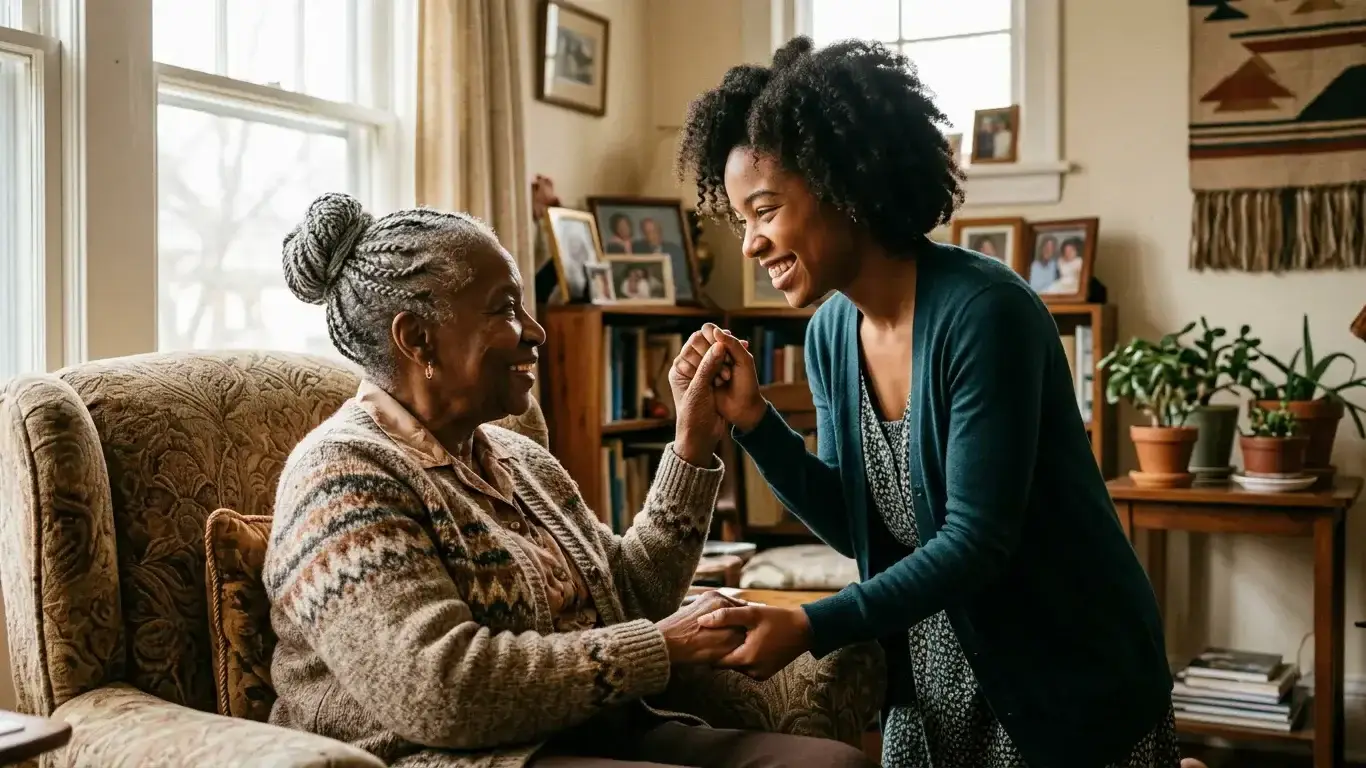
The Future Is Bright — and Already Within You
There is genuine excitement in what science and technology are revealing about human longevity. Futurists like Ray Kurzweil have spent decades mapping what they call the law of accelerating returns — the idea that technological progress compounds on itself, moving faster and faster toward a horizon we cannot yet fully see. The implications for human health, lifespan, and capacity are staggering. Kurzweil has predicted that human immortality — achieved through the merging of biology and technology — could arrive as soon as 2030, a possibility we examine in Is Immortality Really Possible by 2030?
But here is what the futurists sometimes miss: the longest-living, most vibrant human communities on earth did not get there through technology. They got there through relationship, purpose, rhythm, and rootedness. The Blue Zones — the pockets of the world where people regularly live past 100 — share not just dietary habits but a sense of belonging, a reason to get up in the morning, and intergenerational connection. The body thrives when the soul has something to live toward.
Consistent movement woven into daily life — not just exercise, but purposeful physical engagement with the world around you.
Food rooted in tradition — the herbs, grains, and whole foods your ancestors grew and prepared, which carry both nutrition and cultural memory.
Community as medicine — the evidence is clear that loneliness is as damaging to health as smoking. We are wired for belonging.
Purpose beyond the self — having something you are building, tending, or contributing to is one of the most powerful longevity factors known to researchers.
Yes, thoughtful supplementation — things like coenzyme Q10, phosphatidylcholine, and vitamin D that support cellular function — can play a role in how we age. But they work best as part of a life, not a replacement for one. The future of your health begins in the choices and connections you tend today.

The Body Decides — and the Body Remembers
The body is not simply a vessel carrying us from moment to moment. It is a living record — of what we have experienced, what we have survived, what has been passed down to us through blood and bone. Our ancestors’ resilience lives in our nervous systems. Their grief does too. And their wisdom, when we learn to listen for it, speaks through sensation, through longing, through the way our bodies know something is wrong — or right — before our minds catch up.
Epigenetics is now confirming what indigenous and ancestral traditions have always known: the experiences of previous generations leave biological marks that can be inherited. What our grandmothers endured under stress, what our grandfathers carried in silence — these things do not disappear. They travel forward in us, showing up as anxiety, as resilience, as physical patterns we did not choose. The body carries the whole story.
This is not cause for despair. It is cause for deep, intentional tenderness toward yourself. The work of becoming your future self is partly the work of healing what your body inherited — not to erase the past, but to metabolize it. To let the grief move through so the wisdom can remain. To honor what was carried so you do not have to carry it forever.
Ancestral wellness practices — breathwork, somatic movement, plant medicine, communal ritual — are not superstition. They are technologies of integration. They are the ways human beings have always helped the body process what the mind alone cannot hold. They are, in many communities, the oldest form of preventive healthcare on earth.
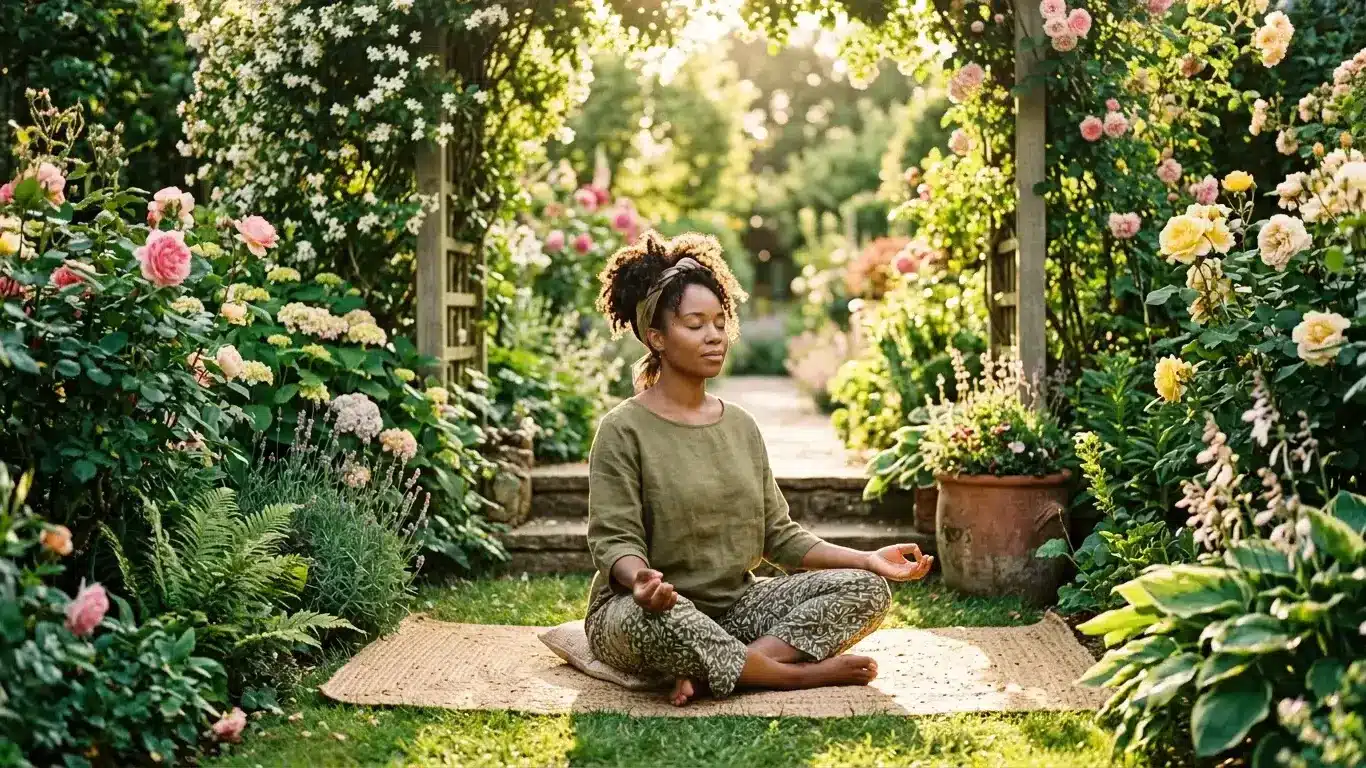
The Mind Knows What the Heart Is Ready For
There is something no technology can replicate: the human capacity for meaning-making. Our brains are not just processors — they are storytellers. They take the raw material of our experiences and weave them into a narrative we can live inside of. And the story we tell about who we are becoming shapes, in very real and measurable ways, who we actually become.
Neuroscience calls this self-directed neuroplasticity — the brain’s capacity to literally rewire itself in response to intentional thought and practice. The future self you consistently imagine, feel, and rehearse in your mind begins to shape the neural pathways that guide your behavior today. Visualization is not wishful thinking. It is a form of preparation.
Our ancestors understood this through ceremony, through storytelling, through the practice of speaking things into being before they were fully real. The griot who named the child’s future. The elder who saw in a young person what they could not yet see in themselves. The community that held a vision of someone’s wholeness when that person had lost sight of it. These are all forms of mind medicine — and they work.
Here are some of the most powerful practices for building a conscious relationship with your future self:
-
Write a letter from your future self
Imagine yourself 10 or 20 years from now — healed, grounded, living in alignment. What does that version of you want you to know today? What does she see that you cannot yet see? Write it down. Read it often. -
Name what you are growing toward
Not just goals — qualities. Who are you becoming? More patient? More courageous? More rooted in your ancestral wisdom? Naming the inner qualities you are cultivating gives your becoming a direction that goes deeper than achievement. -
Practice perspective-taking across time
Research from the Greater Good Science Center shows that one of the most effective ways to shift perspective on current challenges is to ask: How will I see this in five years? This simple question creates psychological distance from urgency and helps you respond from wisdom rather than fear. -
Anchor in community
Share your vision for your future self with people who know and love you. Ask them what they see in you that you may be missing. The village has always been able to hold a larger vision of us than we can hold alone.

Meeting Your Future Self — Together
In many West African traditions, the elder is not simply an older version of the younger self. The elder is a different kind of being entirely — someone whose years of living have burned away certain illusions and deepened certain truths until what remains is something close to pure essence. The community does not produce elders accidentally. It produces them intentionally, through rites of passage, through mentorship, through the expectation that each person will grow into their fullest self in service to the whole.
This is the vision we hold at Ubuntu Village. Not simply that individuals will become better versions of themselves in isolation — but that communities will grow people into their fullest becoming, collectively. East Harlem grows elders. Kenya grows elders. Uganda and Nigeria grow elders. And those elders, in turn, grow the next generation. The cycle is sacred and it is unbroken — as long as we tend it.
When you ask what will I become, you are not just asking about yourself. You are asking about the world you will help create. The decisions you make today — about your health, your relationships, your use of resources, your willingness to heal — ripple outward into the lives of people you may never meet. This is the weight and the beauty of Ubuntu. You are not separate from the whole. Your becoming matters to all of us.
Community is the medicine. And becoming, at its deepest, is the practice of growing more fully into yourself — so that you have more to offer back to the people who shaped you.
Ubuntu Village Inc. — I Am Because We Are. And Together, We Heal.
So look in the mirror again. Not just at the surface, but at what is gathering beneath it. Something in you is already leaning toward who you are meant to become. The question is not whether the becoming will happen. It is whether you will meet it with intention, with community, and with the courage to let the person you are today serve as a worthy foundation for the person you are still growing into.

Reflection Prompts for Your Becoming
Set aside 15–20 minutes with a journal. Write without editing yourself. Let the question lead you.
If your future self — 20 years from now — could send you one message today, what do you most need to hear?
What quality in you is still waiting to be fully expressed? What has been holding it back?
What did your ancestors survive so that you could exist? How does knowing that change what you believe is possible for you?
What pattern — in your health, your relationships, your relationship to money or rest — do you want to stop here, with you, so it does not travel forward?
Who in your community sees a version of you that you haven’t fully claimed yet? What do they see that you resist?
If you were already the person you are becoming, what would you do differently today — starting this morning?
Your Becoming Is Part of Something Larger
Ubuntu Village exists to hold the space where individual becoming and collective healing meet. Through ancestral wellness, community programs, digital storytelling, and our Solar Initiative in Uganda — we are building the kind of future where more people have the conditions to grow into who they were always meant to become. Walk with us.
✦
Resources
-
Becoming Friends With Your Future Self — Psychology Today
An exploration of future self-continuity: how envisioning and connecting with your future self influences decision-making, personal growth, and identity over time.
psychologytoday.com — Becoming Friends With Your Future Self -
101 Journal Prompts for Self-Reflection — Notes by Thalia
A practical resource for guided reflection across past, present, and future selves — useful for anyone embarking on intentional inner work.
notesbythalia.com — Journal Prompts for Self-Reflection -
Four Ways to Gain Perspective on Negative Events — Greater Good Science Center, UC Berkeley
Research-backed strategies for shifting perspective and building resilience — essential tools for navigating life transitions with grace.
greatergood.berkeley.edu — Four Ways to Gain Perspective -
Ray Kurzweil — The Law of Accelerating Returns — Wikipedia
Background on futurist Ray Kurzweil’s theory of technological acceleration and its implications for human longevity and transformation.
en.wikipedia.org/wiki/Ray_Kurzweil
Read next: What Will I Become Now: A Reflection on Ancestral Becoming
Community is the medicine.
Becoming who you are meant to be is not a solitary act — it is a communal inheritance. When you invest in Ubuntu Village, you invest in every ancestor whose sacrifices made your becoming possible.

Michele Mitchell is the Founder, President & CEO of Ubuntu Village Inc., a 501(c)(3) nonprofit rooted in East Harlem, New York, with programs in Kenya, Uganda, and Nigeria. A writer, advocate, and community strategist working at the intersection of ancestral wisdom, public health, and community power, Michele leads Ubuntu Village’s work to center communities as the protagonists of their own healing. She writes from the conviction that science and spirit are complementary, that healing is relational, and that community is the medicine.
Discover more from ubuntuvillageusa
Subscribe to get the latest posts sent to your email.